
Foster Parents

We all want the children in our care to succeed, but foster parents face the distinct reality of helping kids navigate a past they didn't control. BioSocial Cognition bridges neuroscientific knowledge and everyday caregiving—giving you actionable strategies for understanding behavior and recognizing how past environments impact how a child or teen interacts with the world.
Whether you are welcoming a child into your home for the first time or guiding a foster teen through complex life challenges, everything you need is right here. Browse expert insights, download free family tools, and discover interactive workshops & training built to help you overcome hurdles, deepen trust, and empower your youth to achieve their potential.
Join our founder, Thomas C. Rector, as he shares his experiences as a father of five, adoptive parent, a foster care mentor and trainer, CASA, and board member for child advocacy organizations.
Browse the videos and articles below for actionable insights to support your foster parenting journey.

What Does it Mean to "Be a Memory Maker"
In this quick 2 minute video, Thomas C. Rector, founder of Accrescent Institute, answers the question, What Does it Mean to "Be a Memory Maker"?
Learn how this grounding phrase embodies our goal to make a difference in the lives of those we interact and work with on a daily basis.

Recognizing and Choosing the Memories We Draw Upon
Thomas C. Rector shares this analogy for recognizing the memories we draw from and the opportunity we have to choose which memories we want to carry forward in our interactions with others - and especially with our children.

Making a Difference for Children in Foster Care: A Commitment
Join us for an insightful conversation with our founder, Thomas C. Rector, as he shares insights on - and his commitment to - making a difference for children and youth in the foster care system.
We discuss why a commitment to children in foster care matters, including the unique challenges foster children and youth face as they navigate the foster care system and eventually age out into adulthood.
Find even more encouragement and resources for your foster parenting journey on the Accrescent Institute YouTube channel.

The Agreement Process
Workshop
In this two-part, live recorded training, join Thomas C. Rector as he guides two participants through The Agreement Process for the first time.
Through example, discussion, foibles, and insights, you'll gain an understanding of how The Agreement Process works and how it helps you communicate with teens - and others.
Inside you'll also find the Agreement form and a PDF Reference Handout to walk you through The Agreement Process Fundamentals and Methodology.


Individuality Worksheets
How You Process & Interact
Learning Styles & Preferences
Download a PDF of the Individuality Worksheets, used in Beyond the System: Empowering Your Success Through Learning and other advanced or specialty workshops.
Accrescent Institute is a 501(c)3 non-profit organization dedicated to sharing BioSocial Cognition through workshops, seminars, and one-on-one training to organizations and individuals.
Below are the Training and Workshops that have been developed and customized specifically for Foster Parents and Families

As foster parents and advocates, we want our children to succeed, to thrive. But our kids are coming to us with a past that we cannot control or change. How can we help our kids overcome past experiences and enable them to grow into thriving adults?
In this interactive session, we look at how to connect neuroscientific knowledge and practical application to develop confident adults equipped with the tools to achieve their potential.

What’s different about parenting a foster child?
In this interactive session, we'll delve into what factors uniquely impact foster parenting, how past memories and environments impact a child’s development, behavior, and responses, and how the foster care system adds more dimension and variables to the parenting equation.
We’ll talk about what to listen for, what to look for, what information to gather, and who to gather it from.

Why do our foster teens make the choices they do? What could they possibly be thinking? How can we guide them into adulthood with the tools they need to lead healthy, productive lives?
In this interactive session, we’ll explore the development, neuroscience, and internal and external factors that impact teen choices and behavior…
So that you can better understand where your foster teen is coming from, why they are making the choices they are making.
You’ll also gain a methodology for cultivating positive, productive communication and relationship with your teens. And a tool for communicating and reaching agreements through the teen years and beyond.
If your teens attend a Your Brain, Your Choice session, you will also come away with a shared vocabulary and methodology for communicating and reaching agreements through the teen years and beyond.

Youth face very real issues when communicating with the adults in their lives. Each wants to be heard and taken seriously, but struggle finding productive ways to communicate.
During this interactive session, we’ll identify barriers youth and adults face when communicating, delve into the impact memories, genetics, and development have on behavior and communication, and discuss the opportunity you have to empower productive communication.
You’ll walk away with a process and tool you can immediately use to share and implement with to impact the youth and families you serve.
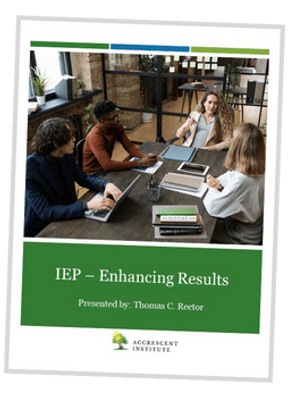
IEPs - Is it yet another mandatory meeting? Or can we make it an opportunity to collaborate to further impact the outcome for the student?
At every Individualized Education Program meeting, key individuals with vast experience bring to the table their specific insights of the student.
In this interactive session, you gain a tool for identifying factors that can contribute to the IEP team’s efforts to develop a plan that will enhance student outcomes.
By bringing together each team member’s insights, you will build a holistic understanding of the various factors influencing behavior and educational performance, enhancing your ability to make a difference.

Advocating for Family Relationships
You will learn why a child’s past must be connected with their future.
Foster children have a unique challenge to integrate their birth family memories and experiences with their foster parent teaching and values.
Gain a practical approach to connect the past to present and future.

Improving Communication and Relationship with Foster Teens
Foster parents face unique situations and challenges throughout day-to-day life with their teens.
Designed for attendees who are already familiar with the BioSocial Cognition model, this practical, more advanced workshop, delves further into how to overcome the difficult challenges we face with our youth.
Using your understanding of how and why memories are affecting your teen’s behavior, you can better identify needs, understand where they are coming from, and improve your communication and relationship with your foster teens.
Recommend previously attending Raising a Foster Child to Thrive.

Preparing For & Navigating the Teen Years
Often in our foster parenting journey, we get to navigate the teen years.
In this interactive session, you’ll learn how and why memories impact the teen years, how to prepare for and navigate the teen years with an eye on the future, and come away with a practical, proven methodology for building communication and relationship with your teens.
We'd love to work with you!
Please fill out our contact form to let us know more about yourself and training options you're interested in exploring.
Our Training & Workshops help you and your family to expand your understanding of the "why" behind behavior and equip you with additional tools for communicating.
Training and workshops are available in a variety of formats:
-
1:1 via Zoom
-
Small Group Training
-
Custom Training for Organizations
-
On-Demand or
All sessions are engaging, interactive, and customized specifically to the audience.
Durations range from 90 min to half and full day training. For in-depth training, organizations and individuals may choose multiple sessions delivered over a number of weeks.


